Chemical Import Customs Clearance China Hazardous Goods Rules
Chemical import customs clearance China. Hazardous Chemicals List check, Chinese SDS and GHS label, UN packaging, Decree 280 era declaration fields. Send your CAS number.
By SeeHog Logistics editorial team
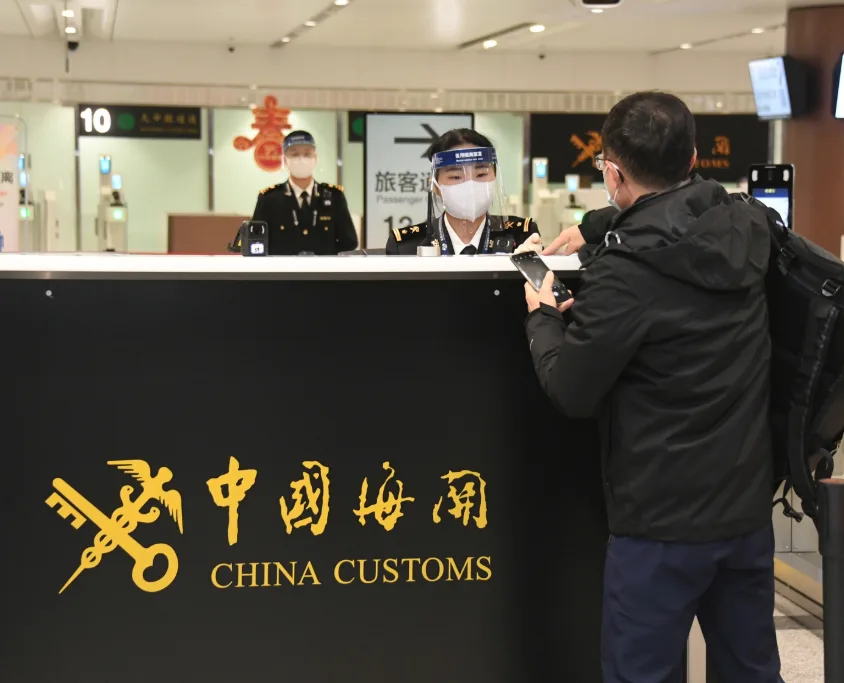
Ask any importer what went wrong with a delayed container and the answer is rarely the customs declaration itself. In chemical import customs clearance China, the failure almost always sits upstream, in a classification decision made months earlier by someone who never read a Chinese regulation. Getting the order of operations right is the difference between a four day release and a six week detention.
Step one is deciding what your product legally is, not what you call it. Three separate definitions apply at once. The 2015 List of Hazardous Chemicals, which runs to roughly 2,828 entries and has been amended twice since, determines whether statutory inspection applies. The UN number and transport classification determine whether your goods are dangerous goods. And whether the substance appears in the Inventory of Existing Chemical Substances determines whether you need a new chemical substance registration before a single gram may be imported. Cinnamon oil, for example, carries HS code 3301294000 which is not a hazardous chemical code, yet its properties still have to be checked against the list. A mixture is judged on whether its main components reach the threshold percentage stated in the list, which is why self assessment so often goes wrong. Commission a hazardous characteristics classification and identification report from a qualified laboratory before you sign anything.
The new Chemicals Safety Law has raised the stakes since 1 May 2026. Passed on 27 December 2025, it lifts hazardous chemical management from administrative regulation to national law for the first time, and it explicitly assigns customs the duty of inspecting imported hazardous chemicals and their packaging. It also introduces dual penalties, fining both the company and the individuals directly responsible. Failure to provide a Chinese SDS, or to affix, print or attach a compliant Chinese safety label, now carries fines up to 100,000 yuan, rising to 200,000 if uncorrected, with production suspension available in serious cases. This is no longer a paperwork formality.
Chinese SDS and Chinese GHS label are the two documents that decide your release. The SDS must contain all sixteen sections in the prescribed order, with titles, numbering and sequence unchanged, covering identification, hazard summary, composition, first aid, firefighting, accidental release, handling and storage, exposure controls, physical and chemical properties, stability and reactivity, toxicology, ecology, disposal, transport, regulatory information and other data. The label must follow GB 15258 and carry the Chinese product name and model number, the main hazardous components and their percentages, the signal word, the correct GHS pictograms, hazard statements, precautionary statements, supplier details matching section one of the SDS, and a 24 hour emergency telephone number based in China. That number cannot be 119 or 120. Where a product has more than five hazardous components, list the five most dangerous.
Declaration fields must be completed with precision in the Single Window. You must enter the goods attribute, the inspection and quarantine name matching the actual property, the commodity code, the hazard class, the packaging class, the UN number and the packaging UN mark. Selecting ordinary chemical product where the goods are in fact hazardous is treated as a declaration error that can attract penalties and damage your AEO status. Hazardous chemicals are not eligible for the two step declaration model, and every consignment is subject to actual inspection, whereas qualifying ordinary chemicals may use the simplified route.
Licences and registrations depend entirely on which list your substance sits on. Hazardous chemicals require hazardous chemical registration with the emergency management authority before first import, and a hazardous chemicals operation licence if you intend to resell. Precursor chemicals additionally need a precursor operation licence or filing plus a dual use items and technology import licence. Ozone depleting substances need an import quota and licence. New chemical substances require environmental management registration with the Ministry of Ecology and Environment before production or import, with ordinary registration applying at volumes of ten tonnes or more per year and overseas manufacturers required to appoint a domestic agent.
Packaging is a hard gate, not a formality. Packaging material, form, specification, method and single package weight must all suit the nature and use of the chemical inside. UN packaging marks must be present and correct, and performance and use assessment certificates apply where the packaging falls under the import and export commodity inspection law. Flammable liquids under UN1993 need a flash point test report, while some electrolyte shipments require temperature control in transit.
Plan the timeline realistically. Document review and declaration run about half a working day each. If inspection is triggered, add roughly three working days. A label compliance failure adds five to eight working days for rectification, and a quantity or origin mismatch adds three more. Hazardous chemicals require an electronic manifest submitted through the Single Window forty eight hours before arrival, and goods may only be released after the entry cargo inspection and quarantine certificate is issued.
Tax position varies by heading and purity. Import VAT is generally thirteen percent, with some categories at nine percent, and duty may be reduced under RCEP or other agreements where a valid certificate of origin is presented. Consumption tax applies only to specific items such as refined oil products and certain coatings. Purity matters more than buyers expect, since ethyl acetate at or above ninety nine percent concentration and below that threshold can fall under different codes with different rates and control conditions.
Send us your product name, CAS number, full composition with percentages, MSDS section fourteen, annual volume, country of origin and intended use. We will tell you whether your product is on the Hazardous Chemicals List, whether it needs new chemical substance registration, which licences your Chinese buyer must hold, whether your SDS and label pass, and what duty and VAT to expect. Email us or add WhatsApp +86 15221865538 and we will return a written classification and compliance assessment for your specific product before you book production.