Customs Clearance Huangpu For Transformer And PV Cable Export
Customs clearance Huangpu for transformers, PV cable and storage cabinets. HS 8504 subheading check, UN3295 DG packing, Huangpu new port direct loading, factory declaration files.
By SeeHog Logistics editorial team
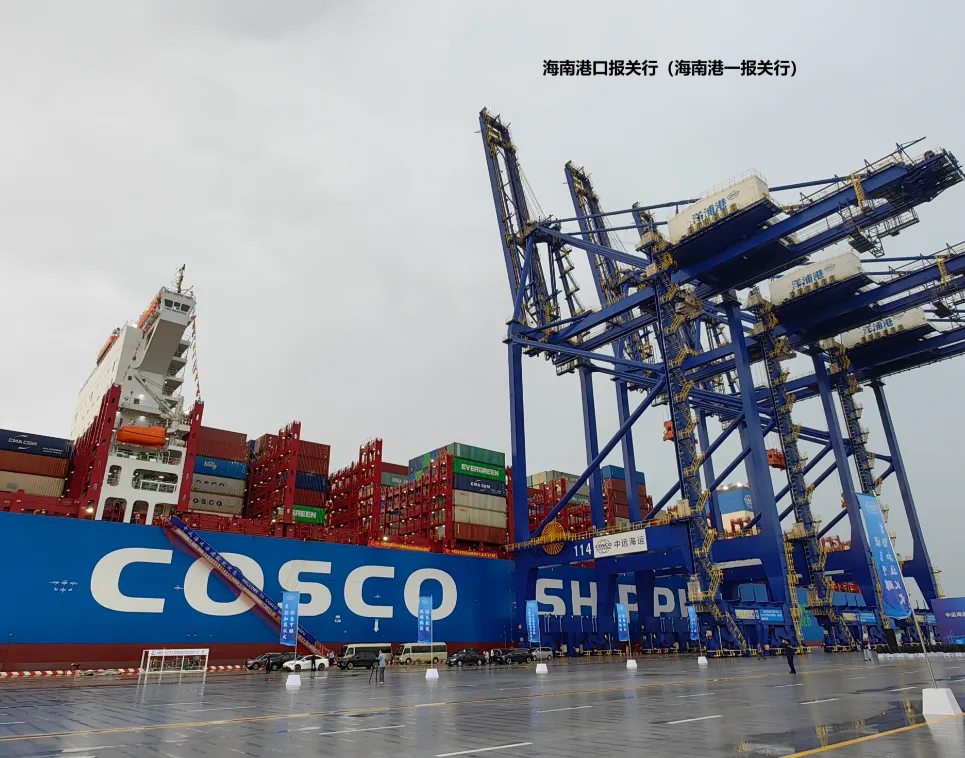
Huangpu is one of the oldest and busiest port areas on the Pearl River, and a large share of solar cable, transformer and storage cabinet shipments from the Greater Bay Area are declared here. Because Huangpu sits under Huangpu Customs rather than Guangzhou Customs, the rules that govern customs clearance Huangpu differ in practical detail from neighbouring terminals, and buyers who plan around those differences avoid the delays that catch most first time shippers.
Huangpu New Port now runs direct loading and direct discharge. Huangpu New Port Customs supervises the Xinang operation area of Guangzhou Port Group plus several Class 1 and Class 2 terminals, and it has rolled out facilitation measures including two step declaration, direct discharge on arrival and direct loading at the ship side. For oversized electrical equipment this matters considerably. Direct loading means the container can move from the truck to the vessel without an extended stay in the yard, which reduces handling risk on heavy transformers and shortens the window in which a stowage problem could force a roll. We schedule haulage to match the direct loading window rather than treating the yard as a buffer.
Huangpu operates a green channel for qualified new energy exporters. The customs district has established a key enterprise express lane, and qualified new energy firms have reported declaration to release in under one day for photovoltaic products. A related reform allows goods of the same model, specification and composition to be sampled once with results valid across multiple shipments, which has cut inspection workload by a substantial margin for repeat exporters. If you order the same cable specification or the same transformer rating on repeat orders, this inspection batch arrangement removes most of the sampling delay after the first shipment.
Verify the HS subheading against the nameplate, not the product name. Transformers fall under heading 8504, but the subheading is set by rated capacity and cooling medium working together. For oil immersed units, 650kVA and below is 8504.21, from 650kVA to 10,000kVA is 8504.22, and above 10,000kVA is 8504.23. Dry type units follow 8504.31 at or below 1kVA, 8504.32 from 1 to 16kVA, 8504.33 from 16 to 500kVA and 8504.34 above 500kVA. A common error is declaring a 2000kVA oil filled unit under a dry type code because the invoice simply reads transformer. Customs treats this as misdeclaration, triggering duty recovery, fines and a higher inspection rate on your later shipments. We send the nameplate photograph and test certificate with the invoice so the code can be checked before filing.
Oil immersed transformers require a dangerous goods booking. The mineral insulating oil is classified under UN3295 as Class 9, with some low flash point oils falling into Class 3. The document set is fixed. A sixteen section MSDS, a non PCB test report, a packaging performance certificate, a dangerous goods declaration and a twenty four hour domestic emergency contact number. Packing requires a leak proof membrane plus a bottom oil tray, with Class 9 labels on all four container faces. Loading may only take place at a maritime registered hazardous cargo yard, and every Huangpu dangerous goods load must be photographed by a qualified supervisor, covering the empty container, the loading process and the sealed container with the container number visible. Dry type resin transformers contain no oil and move as general cargo, which removes the DG surcharge entirely.
Lithium storage cabinets follow UN3536 with a stowage restriction. A pre assembled unit with batteries installed is managed as UN3536 Class 9, distinct from loose batteries under UN3480. Under the IMDG Code 42-24 amendment mandatory since 1 January 2026, the stowage category for UN3536 is D, meaning deck stowage only with no under deck loading, and separation from heat sources and accommodation spaces. The container must carry a valid CSC safety approval plate, UN3536 marks on all four sides and the total battery energy in kWh at the door. Huangpu Customs maintains a dangerous goods database and a shadow product name list, and enforces strict checks on transport labels and UN38.3 reports for battery products, so documentation gaps are caught before the container reaches the gate.
Wooden packaging failures are common and entirely avoidable. Every wooden case and pallet must carry the IPPC mark. Customs in Vietnam, Thailand and Indonesia destroy unmarked packaging on discovery and charge demurrage for the delay. We apply ISPM-15 heat treatment or fumigation as standard and photograph every mark before sealing.
Destination certification determines whether your cargo clears at the far end. Thailand requires TISI certification under TIS1573 for oil type or TIS1814 for dry type on grid connected units of 50kVA and above, accepting only Dyn11 vector groups. Vietnam requires CR certification held by a local importer, which a Chinese factory cannot hold alone, with a two to three month lead time. Malaysia requires SIRIM certification for grid connected units and TNB likewise accepts only Dyn11. We confirm this certificate set against your destination before the booking is locked.
Send us your equipment list, transformer type and rated capacity, cable specifications and destination country. We will confirm the correct HS code, the classification route, the accepting yard, the certificate set your buyer needs and a realistic timeline built around the Huangpu loading window.Email us or add WhatsApp:+86 15221865538