Electronics Import Customs Clearance China 2026 Rules
Electronics import customs clearance China. 2026 wafer origin rules, CCC and SRRC certificates, HS codes, duty and VAT. Send your part number, brand and origin.
By SeeHog Logistics editorial team
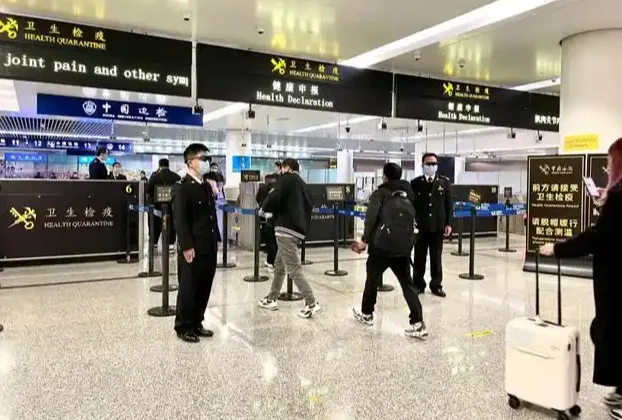
If your invoice says one country and your chip was fabricated in another, electronics import customs clearance China will now stop at the declaration screen. The 2026 tariff adjustment changed the origin logic for semiconductors, and the Single Window updated its declaration elements on 1 January. Buyers who keep using last year's paperwork are being held in review.
Origin for integrated circuits is now the wafer fab, not the packing house. Under heading 8542, the declared origin is the country where the wafer was manufactured, normally the tape out site, regardless of where packaging or testing happened. Multi wafer devices must list every wafer manufacturing location. This matters commercially because memory integrated circuits under 854232 with a US wafer origin still carry an additional ten percent duty. Where a Korean wafer is packaged in Malaysia, the origin follows the wafer, and you must be able to evidence it.
Discrete semiconductors work differently, and this confuses most importers. For diodes, transistors and LEDs under heading 8541, two new declaration elements apply, namely the location where welding and packaging processes occurred and the value added ratio at that location. Where value added reaches thirty percent or more, origin is declared by the packaging location. Take a Korean wafer packaged in Malaysia with an ex works price of two thousand dollars and raw material cost of thirteen hundred, giving thirty five percent value added, and the origin is declared as Malaysia. Ask your supplier for these figures before you place the order, because you cannot reconstruct them at the port.
CCC certification is the second hard gate, and no certificate means return or destruction. The catalogue covers seventeen categories and 103 product types, including wires and cables, low voltage apparatus, small motors, electric tools, household appliances, information technology equipment and lighting. Customs verifies electronically through the Single Window, so paper certificates no longer help. Where the goods are genuinely for research, testing, repair of end user equipment, commercial display without sale, temporary import for exhibition, or components imported for full re export, you may apply for an exemption certificate, but the application must be approved before arrival. Applying after the goods land does not work.
Wireless capability triggers a separate approval that CCC does not cover. Any device with Bluetooth, Wi Fi, ZigBee, NB IoT or 4G and 5G capability needs SRRC type approval from the Ministry of Industry and Information Technology, producing a CMIIT ID that must appear on the nameplate alongside the applicant name, model and serial number. SRRC and CCC run in parallel and neither replaces the other. Devices connecting to public telecom networks may additionally need network access licence. Operating or importing without type approval carries fines from fifty thousand to two hundred thousand yuan, rising to one million where the violation is not corrected.
Classification errors are the quietest cause of delay. Chapter 85 is highly granular, and multifunction chips are frequently misclassified. Integrated circuits containing microprocessors or memory must never be declared under headings for non IC goods. Where you are uncertain, apply for an advance ruling rather than guessing. Customs now runs big data price comparison, and a declared value ten percent below the three month average for similar goods triggers manual valuation, so related party transactions should be disclosed proactively with supporting price justification.
Two categories are simply refused entry. Second hand chips, pulled parts, refurbished components and used PCBs are prohibited, and customs checks condition on every inspection. Once identified as used, the goods are returned and penalties follow. Separately, branded components from Intel, TI, Samsung or Broadcom require brand authorisation and legitimate channel proof, otherwise the consignment is treated as infringing and confiscated.
Batteries and controlled items need their own documents. Lithium battery products require UN38.3 test documentation. High end CPUs, GPUs and AI training chips may require dual use item permits. RoHS and REACH declarations are commonly requested for European and US sourced components, and 2026 also introduced environmental declaration elements including RoHS compliance and carbon footprint data for semiconductors.
Tax position and timing. Most processors and memory under 8542 attract zero MFN duty with thirteen percent import VAT, though some multi component integrated circuit subheadings carry 1.4 percent and ordinary rates run far higher. Under RCEP, qualifying origin can remove duty entirely. Customs now allows declaration up to four days before vessel arrival, and using this window is the simplest way to avoid queue delays during peak periods.
Send us the part name, brand, part number, HS code if known, wafer fabrication location, packaging and testing location, value added ratio, whether it has wireless capability, whether it contains lithium battery, country of origin, quantity and intended use. We will tell you the correct heading, which origin to declare, whether CCC or an exemption applies, whether SRRC is required, what duty and VAT to expect, and whether the goods can clear at all. Email us or add WhatsApp +86 15221865538 and we will return a written compliance assessment before you commit to purchase.