Used Equipment Import China CCIC Pre Shipment Rules
Used equipment import China. Check the prohibited catalogue, CCIC pre shipment inspection, O licence, HS codes, duty and VAT. Send your machine name, model and year of manufacture.
By SeeHog Logistics editorial team
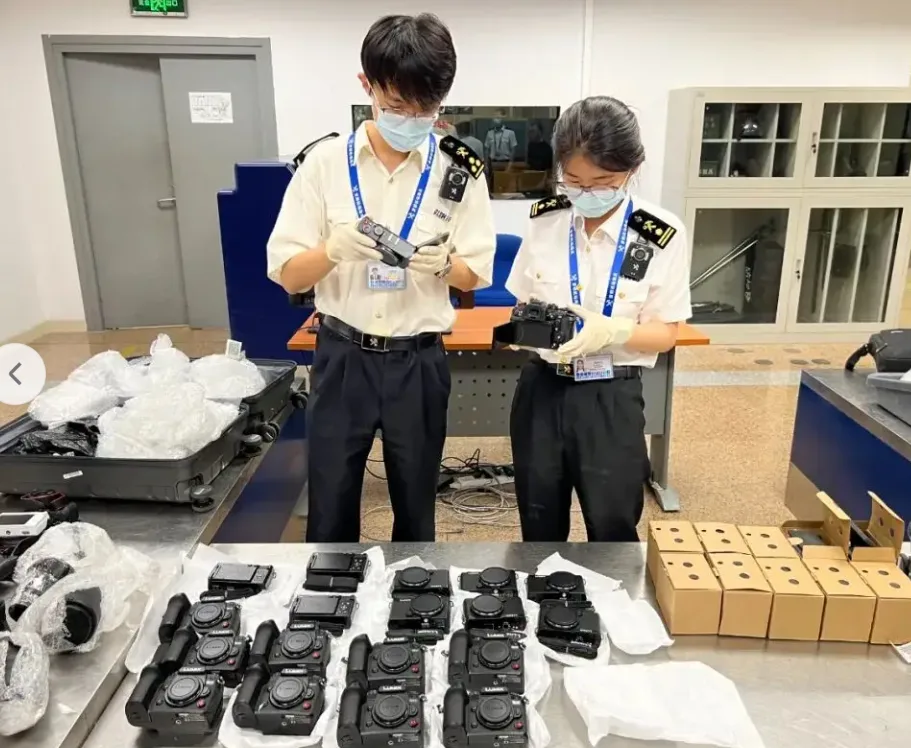
Most buyers approach used equipment import China the wrong way round. They negotiate price, agree a delivery date and book freight, then start asking about customs. By that point the machine is already on a truck, and one missing certificate turns a purchase into a return shipment. Three gates decide whether your machine will ever clear, and all three must be checked before you sign anything.
Gate one is admissibility, and it is absolute. Check your machine against the Catalogue of Prohibited Old Mechanical and Electrical Products issued by the Ministry of Commerce and the General Administration of Customs. If it appears there, customs will not accept a declaration at all, and the only outcomes are return or destruction at your cost. This is not a penalty you can negotiate around. Some categories, such as certain construction machinery beyond a set age, are simply barred, and no amount of documentation changes that. Confirm admissibility first, because everything after it is wasted effort if the answer is no.
Gate two is the pre shipment inspection, and it cannot be done after arrival. Under the inspection and supervision measures list, the seventeen categories of high risk old machinery covering personal safety, health and environmental protection must be inspected overseas before loading. The inspection is carried out by CCIC or another recognised body at the overseas warehouse or factory, and the resulting certificate is mandatory for declaration. If you ship without it, the consignment can be ordered returned and, in serious cases, fined up to one million yuan. A French precision instrument shipment once had to be sent straight back home for exactly this reason. Note also that a Japanese JIS test report or any other foreign third party certificate does not replace CCIC, because the comparison is made against Chinese GB standards.
Gate three is licensing, which depends on which list your machine sits on. Ordinary restricted old equipment needs an automatic import licence, often called an O licence, issued by the local commerce bureau. Key controlled items such as large complete production lines and high end printing machinery require a key old machinery import licence from the Ministry of Commerce. Printing machines additionally need a printing business permit, and anything inside the CCC catalogue needs a China Compulsory Certification certificate or an exemption letter.
Do not assume that unused means new. Chinese rules treat a machine as old if it has been used, or if it is unused but past its quality guarantee period, or if it has been stored so long that components show visible wear, or if new and old parts are mixed, or if it has been refurbished. A visually pristine machine that left the factory years ago can still be classified as old equipment, and declaring it as new is a violation.
Prepare the machine physically before the inspector arrives. The equipment must be cleaned of oil, cutting fluid, swarf and dust, with no solid waste trapped inside. Nameplates must be complete and legible, showing brand, model, year of manufacture, serial number, voltage and power. Guards, emergency stops, earth connections and leakage protection must be intact, with no exposed wiring. European and American machines running on 220 or 440 volts need适配 transformers and Chinese safety warnings. Core components must be original, with no scrap parts mixed in. For general industrial equipment, a manufacture date within roughly ten years is advisable, and older machines require a supplementary performance assessment report.
The certificate has a validity window. CCIC issues the pre shipment inspection certificate and report, typically valid for six months to a year depending on the machine. Near shore origins usually take five to eight working days, while Europe and the Americas take around seven to twelve. Everything on the certificate, including brand, model, serial number, year of manufacture and condition percentage, must match the contract, invoice and nameplate exactly, because any mismatch triggers a declaration error.
Clearance does not end at the port. Old machinery faces both port inspection and destination inspection. The destination check verifies consistency of name, specification, model, quantity and origin, then tests electrical and mechanical safety under running conditions, and finally checks noise, dust, radiation and emissions. Your engineer must be present to start the machine and confirm parameters. Where the pre shipment result and the destination result disagree, the destination result prevails.
Send us the machine name, brand, model, HS code if known, year of manufacture, technical specifications, weight, dimensions, country of origin and intended use. We will tell you whether it is on the prohibited catalogue, whether CCIC pre shipment inspection applies, which licence you need, whether the machine can physically pass inspection, and what duty and VAT to expect. Email us or add WhatsApp +86 15221865538 and we will return a written admissibility and compliance assessment before you commit to purchase.