Customs Clearance Ningbo For Transformer And PV Cable Export
Customs clearance Ningbo for transformers, solar cable and storage cabinets.属地报检 electronic ledger, Zhejiang VGS photo upload, UN3536 stowage, ISPM-15 mark check, factory files.
By SeeHog Logistics editorial team

Ningbo handles a very large share of the transformer, solar cable and storage cabinet volume leaving China for Europe, North America and the Middle East, and the port has a set of local operating rules that differ from both Shenzhen and Guangzhou. Understanding customs clearance Ningbo before you place the order, rather than after the container is built, is the difference between a clean sailing and a rolled shipment.
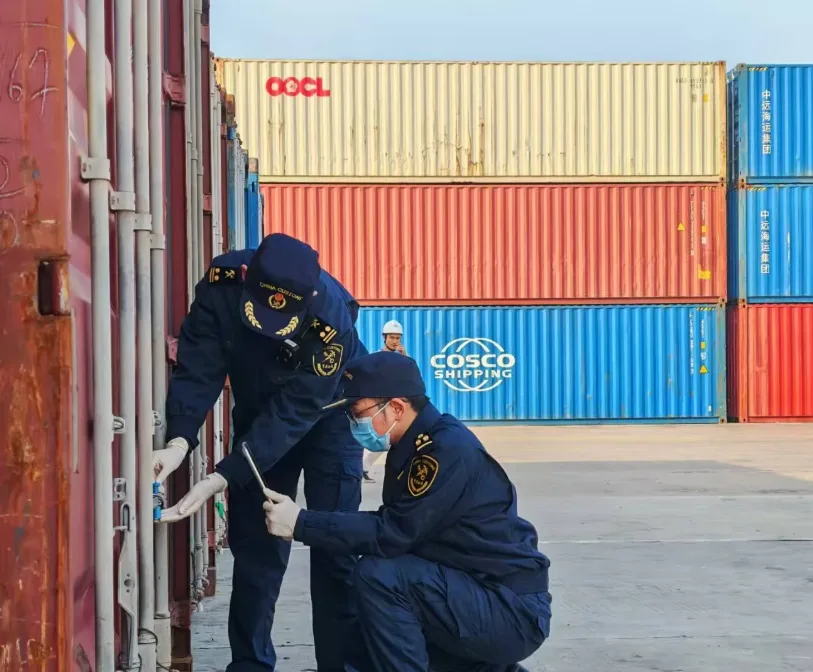
Statutory inspection must be filed at the factory location, not at the port. This is the rule that catches the most overseas buyers. Ningbo enforces the principle that legal inspection goods must be declared at the customs district where the factory is located, and the inspection cannot be arranged on an ad hoc basis at the terminal. Transformers under heading 8504, photovoltaic cable and most electrical products carry supervision condition B, which means mandatory commodity inspection. The correct sequence is inspection declaration first, electronic ledger generated second, then customs declaration referencing that ledger number. If your supplier loads the container and hauls it to Ningbo before the ledger exists, the declaration cannot be filed at all, and the container sits in the yard accruing detention while the inspection is run retrospectively. We file the inspection declaration three to five working days before the vessel cut off, and for goods requiring laboratory sampling we reserve seven days.
Zhejiang maritime now requires structured photo uploads through VGS. Since the Zhejiang Maritime Safety Administration updated its rules, the factory packing operator must upload packing photographs directly into the system, covering the empty container, the half loaded stage and the fully loaded stage, and these must be named by container number. The empty container shot must show both doors fully open with the interior clearly visible. The half loaded shot must show the packing operator present and the load arranged correctly. The full container shot must show the right door half closed, the operator visible, the technical instructions posted on the upper half of the left door interior, and the load secured with netting, triangular chocks and lashing straps. Uploading extra photographs, uploading a half loaded shot without the Class 9 mark, or duplicating images are all treated as non compliance and will fail the review. Because video review and hazardous yard slot release are both prerequisites for gate in, a failed upload delays the entire booking. Our packing team is certified and follows this exact sequence on every dangerous goods load.
Battery storage cabinets are split into two very different UN entries. This distinction determines whether you need a packaging performance certificate at all. A large containerised commercial storage unit shipped as one integrated machine with no separate outer packaging is classified as UN3536, does not require a dangerous goods packaging certificate, and moves through the maritime special filing channel, which is the mainstream route for large storage projects. A small residential all in one unit shipped in individual packaging is classified as UN3481 and absolutely requires the packaging certificate, without which customs declaration and vessel loading are both refused. For all sea freight, the battery state of charge must be at or below thirty percent, and maritime authorities conduct random spot checks at the port, with overcharged units detained and forcibly returned. Under the IMDG 42-24 rules now in mandatory enforcement with no transition period, UN3536 is restricted to deck stowage only and must be kept at least 2.4 metres from heat sources.
The document set must be identical across every form. Customs and carriers now cross check that the product name, UN number and hazard class shown on the contract, invoice, packing list, UN38.3 report and transport appraisal report match exactly, and any discrepancy triggers a rejected declaration. The UN38.3 report plus test summary is the baseline transport document, and if the cell model, chemistry or capacity changes, the test must be repeated. The MSDS must be in both Chinese and English, must state the UN number, Class 9 status and battery chemistry accurately, and must describe the emergency response for thermal runaway, fire and leakage.
Wooden packaging is checked hard at Ningbo and again at destination. Ningbo port applies strict scrutiny to ISPM-15 compliance, and unmarked wooden cases are liable to be held at the port. Every natural wood case, pallet, frame, dunnage piece and wedge must carry the IPPC mark after heat treatment or fumigation. Manufactured board such as plywood and particleboard is exempt and works well for lighter cable drums. Destination customs in Vietnam, Thailand and Indonesia destroy unmarked packaging on discovery. We photograph every mark before sealing and include the images in your document set.
Oversized transformers need pre-notification at Ningbo. Equipment wider than 3.5 metres or higher than 2.8 metres must be reported to the port seven to fifteen days in advance so that a special container and heavy lift corridor can be arranged. We also prepare a written load securing calculation covering the centre of gravity, lifting point loading and lashing material strength, and retain full video records as evidence for any later customs audit.
Destination certification decides whether the cargo can be sold. For North America, UL certification is the practical market standard, with UL 1973 for battery packs and UL 9540 for storage systems, and the sixth edition of UL 9540A now requires installation level fire testing to prove thermal propagation does not spread between units, which has become a precondition for project financing and insurance. For the European Union, storage batteries must meet the new CE requirements covering LVD, EMC and RoHS under standard EN IEC 62619, and industrial batteries above 2kWh require a digital battery passport from 2026. Malaysia brought storage systems into mandatory SIRIM certification from 15 October 2025, requiring a PCS certificate and a QR coded safety label, with a choice between Type 5 annual certification with factory audit or Type 1B batch certification with sample testing. India requires BIS certification to IS 16270 for batteries and IS 17387 for the BMS, and Australia requires CEC listing for residential systems. For transformers, the 2026 North American rules add insulation material matching tests, abnormal overload testing and mandatory digital traceability labels. We confirm the applicable certificate set against your destination before the booking is locked.
Send us your equipment list with transformer type and rated capacity, cable cross sections, storage cabinet configuration, UN classification if known, and destination country. We will confirm the supervision condition, the correct HS code, the inspection filing location, the packing photo requirements, the certificate set your buyer needs, and a delivery plan built around the actual Ningbo cut off. Email us or add WhatsApp +86 15221865538.