Customs Clearance Qingdao For Transformer And Storage Export
Customs clearance Qingdao for heavy transformers, PV cable and storage cabinets. Direct loading at Qingdao Dagang, electronic authorization filing, UN3536 maritime record, SOC under 30.
By SeeHog Logistics editorial team
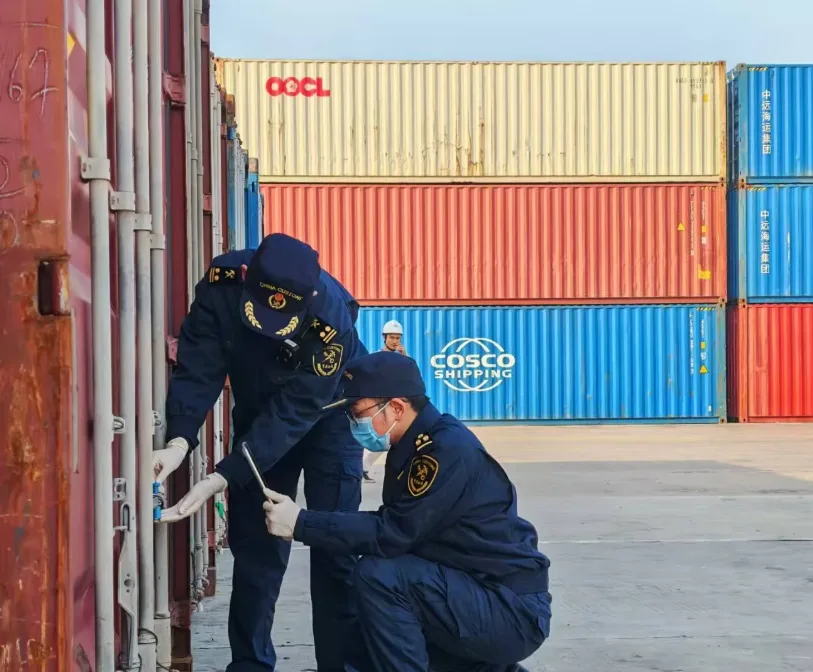
For transformer, photovoltaic cable and energy storage cabinet shipments heading to the Middle East, Central Asia, Russia and Northern Europe, customs clearance Qingdao has become the routing decision that most determines your delivery date. The port is now the primary northern gateway for new energy equipment, with exports of electric vehicles, lithium batteries and photovoltaic products through Qingdao customs growing 61.8 percent year on year in the first ten months of 2026.
Direct loading at Qingdao Dagang removes the heavy lift bottleneck. This is the single biggest practical advantage for buyers of large equipment. Qingdao Dagang customs operates an advance declaration plus direct loading model, where oversized engineering equipment moves straight from the factory to the quay and is loaded while being inspected, described as arrive inspect load dispatch. The benefit is real: three large transformers totalling more than 700 tonnes were shipped from Dagang to Spain under this model, with the loading window compressed and the order delivery cycle shortened. For a single unit weighing up to 290 tonnes, Qingdao has also demonstrated ship to ship side by side transfer onto the ocean vessel, with maritime authority supervision covering lashing, stowage segregation and vessel stability. If your transformer exceeds normal yard crane capacity, this is the route we recommend.
Electronic authorization must exist before any inspection filing. Since 1 November 2025, export commodity inspection has operated entirely on online electronic authorization. Three roles are involved, the production unit, the consignor and the applicant unit, and the authorization agreement must be initiated through the China International Trade Single Window under the territorial inspection module. If authorization is missing or incomplete, the system automatically refuses to issue the electronic ledger and the goods cannot be exported at all. Where a factory sells through a trading company which then appoints a customs broker, two separate authorization links are required, factory to trading company and trading company to broker. We confirm both links are live before booking space, because this failure is invisible until the declaration is rejected.
Territorial inspection follows the factory, not the port. Transformers under heading 8504, photovoltaic cable and most electrical products carry supervision condition B, meaning mandatory commodity inspection. Such goods must be inspected at the customs district where the production unit is located, and this cannot be arranged at Qingdao on an ad hoc basis. The order is fixed, inspection first, electronic ledger issued second, then customs declaration quoting the ledger number. A useful reform applies if you consolidate goods from several factories into one container, since 4 April 2026 you may declare and obtain a single electronic ledger at the consolidation location rather than filing separately at each factory. We allow three to five working days for standard goods and seven days where sampling is required.
Storage cabinets are declared under heading 8504402000 as UN3536. The declared product name is uninterrupted power supply, with declaration elements covering product name, brand type, export benefit status, power rating, brand, model, GTIN and CAS. The correct transport name is lithium batteries installed in cargo transport unit, main hazard class 9, no subsidiary hazard, special provision 389. Because the cabinet is a large unit rather than a package, a dangerous goods packaging performance certificate cannot be issued for it and is not required. The substitute evidence is the classification society certificate plus the container certificate, and the cargo moves through the maritime filing channel instead.
Maritime filing precedes booking at Qingdao. Qingdao requires the dangerous goods declaration plan to be submitted roughly seven days before the intended sailing, and a filing number must be obtained before the carrier will release space. The document set is fixed, classification society certificate and container certificate, sea transport appraisal report, UN38.3 test report, bilingual MSDS, China Classification Society container certificate with container safety approval photograph, and photographs showing front, side, rear, nameplate, lithium battery fixing, fire suppression system and air conditioning system. The appraisal report must be headed in the exact name of the actual booking shipper, since many ports will not pass maritime filing without this match.
The battery export control pause has a hard expiry date. Under MOFCOM and GAC Announcement 58 of 2026, the export control on lithium battery related items is suspended from 11 November 2026 to 10 January 2027. This suspension covers lithium cells and packs at or above 300Wh/kg, certain lithium iron phosphate cathode materials, artificial graphite anode materials and cell manufacturing equipment. Ordinary commercial lithium iron phosphate cells used in most residential and commercial storage systems sit in the 90 to 160Wh/kg range and fall outside the controlled list. However, the pause is not a cancellation, and what happens after 10 January 2027 has not been announced. For long term or price locked orders extending beyond that date, we advise adding a policy change clause covering permit lead time, cost and delivery extension responsibility. Note also that the suspension does not relax any ordinary dangerous goods supervision, and customs still requires honest declaration of cell energy density, composition and model parameters.
Battery state of charge and stowage are enforced at load. For all sea freight the state of charge must be at or below thirty percent, with random port spot checks and forced return of overcharged units. Under IMDG 42-24, now mandatory with no transition period, UN3536 is restricted to deck stowage and must be kept at least 2.4 metres from heat sources. Internal fixing must be structural, using bolts, rivets or welding through brackets with flame retardant filler, and ordinary foam is not accepted. Series and parallel circuits must be disconnected and the PCS and monitoring equipment de energised before loading.
Wooden packaging is verified at both ends. Every natural wood case, pallet, frame and dunnage piece must carry the IPPC mark after heat treatment or fumigation. Manufactured board such as plywood and particleboard is exempt and suits lighter cable drums. We photograph every mark before sealing and include the images in your document set.
Send us your equipment list with transformer rated capacity and unit weight, cable cross sections, storage cabinet configuration and destination country. We will confirm the correct HS code and declaration elements, the territorial inspection location, whether electronic authorization is complete, whether Dagang direct loading applies to your unit weight, and the certificate set your buyer needs at destination. Email us or add WhatsApp +86 15221865538 and we will return a written routing and compliance plan for your specific order.