Customs Clearance Tianjin For Heavy Electrical Equipment Expor
Customs clearance Tianjin for transformers, PV cable and storage cabinets. Direct loading at Tianjin port, cloud issuance inspection, UN3536 maritime filing, SOC under 30.
By SeeHog Logistics editorial team
When your project ships oil immersed transformers, photovoltaic cable or containerised energy storage cabinets to Russia, Central Asia, the Middle East or Africa, customs clearance Tianjin is the routing decision that most affects both your cost and your sailing date. Tianjin is the natural northern gateway for heavy electrical equipment, and it holds one structural advantage that other ports adopted later.
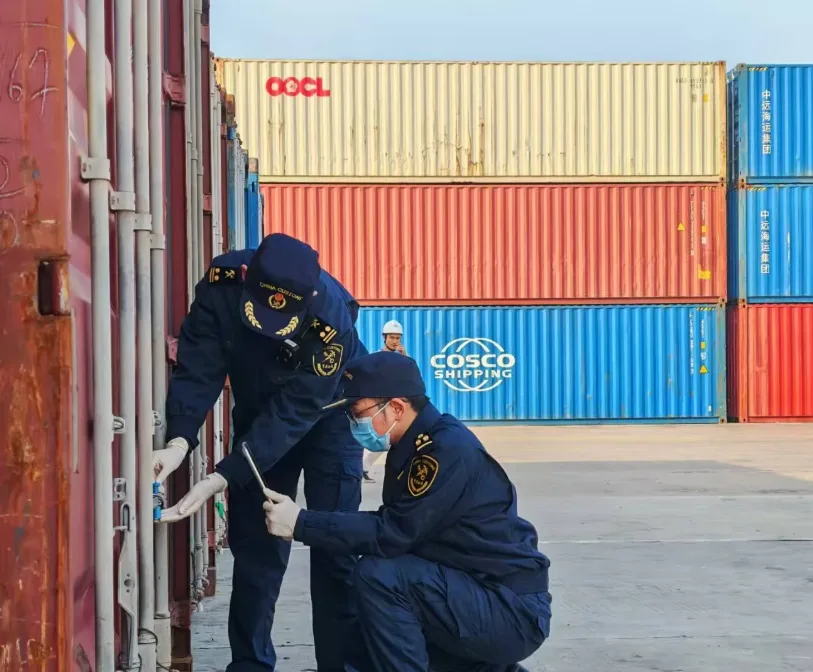
Direct loading was pioneered here and it changes your cost structure. Tianjin Customs together with Tianjin Port Group introduced the direct loading model back in 2019, and it remains the reference implementation nationwide. Under this model you declare to customs in advance through the Single Window, book your gate in slot on the Tianjin Port intelligent access platform, then deliver the container straight to the terminal where the port issues the arrival report and loading proceeds on release. The traditional route required you to deliver cargo to the port roughly five days early, drop the container in an external yard, then move it in again during the collection window. Direct loading removes that double handling entirely, and measured across the programme each container saves around one hundred RMB in logistics cost, with some shippers cutting logistics spend by up to thirty percent. For heavy transformers and oversized storage cabinets this matters twice over, because every extra lift is a risk to the unit as well as a cost.
Territorial inspection now runs on cloud issuance across all Tianjin offices. Transformers under heading 8504, photovoltaic cable and most electrical products carry supervision condition B, so statutory inspection applies. Tianjin Customs brought the territorial inspection management system and cloud issuance of inspection certificates online across all its subordinate offices including Tanggu, Xingang, Dagang, Lingang, Jinghai, Wuqing and Beichen. The practical effect for you is that the electronic ledger can be issued without a physical certificate run around, and remote inspection by audio video link is now available for goods outside the negative list, which compresses the pre shipment window considerably. The sequence is still fixed, inspection at the production site first, electronic ledger issued second, then customs declaration quoting that ledger number. We allow three to five working days for standard goods and seven where sampling is involved.
Storage cabinets route through UN3536 without a packaging certificate. This is the classification question that decides your document set. A containerised commercial storage cabinet shipped as one integrated unit, with batteries pre installed and the cabinet itself certified under the CSC convention, is classified as UN3536 Class 9 with special provision 389. Because the cabinet is the transport unit rather than a package, a dangerous goods packaging performance certificate cannot be issued for it and is not required. What replaces it is the classification society certificate plus the container certificate, and the consignment moves through the maritime filing channel. A smaller unit where the battery powers the equipment body itself falls under UN3481 and does require the packaging certificate. Getting this wrong means rejection at the terminal.
Maritime filing must complete before the carrier releases space. The fixed order at Tianjin is maritime filing, then customs declaration, then gate in, and reversing it produces an automatic rejection. The dangerous goods declaration plan goes in roughly seven days before the intended sailing, and the appraisal report must be headed in the exact name of the actual booking shipper, since most ports will not pass filing without that match. Our standard set covers the classification society certificate, container certificate, UN38.3 report, transport appraisal report, bilingual MSDS, and photographs showing the nameplate, fire suppression system, air conditioning unit and the battery fixing method.
Stowage rules tightened and there is no transition period. Under IMDG amendment 42-24, mandatory since 1 January 2026, UN3536 cargo carries stowage category D, which means deck stowage only and it must be kept at least 2.4 metres from heat sources. The domestic standard JT/T 1543-2025 additionally requires twenty four hour temperature and smoke monitoring of battery cargo areas at sea, with records retained for at least ninety days, and it bars any damaged, swollen, leaking or refurbished battery unit from boarding without exception. Battery state of charge must be at or below thirty percent for all sea freight, with random port spot checks and forced return of overcharged units.
Internal securing must be structural, not cosmetic. Battery modules are fixed through internal brackets using bolts, rivets or welding, with gaps filled using flame retardant material, and ordinary foam is not accepted. Series and parallel circuits must be disconnected and the PCS, monitoring and control equipment de energised before loading. For heavy cabinets we apply steel strapping with angle iron external reinforcement and issue a written securing calculation covering centre of gravity, lifting point loading and lashing strength, because customs audit now examines装载适运性 as closely as the declaration itself.
Wooden packaging is checked at both ends. Every natural wood case, pallet, frame and dunnage piece must carry the IPPC mark after heat treatment or fumigation. Manufactured board such as plywood and particleboard is exempt and suits lighter cable drums. We photograph each mark before sealing and include the images in your document set.
Send us your equipment list with transformer rated capacity and unit weight, cable cross sections, storage cabinet configuration and destination country. We will confirm the correct HS code and declaration elements, the territorial inspection office, whether direct loading applies to your unit weight, the maritime filing timeline, and the certificate set your buyer needs at destination. Email us or add WhatsApp +86 15221865538