Customs Clearance Zhoushan For Heavy Storage Cabinet Export
Customs clearance Zhoushan for oversized storage cabinets, transformers and PV cable. Direct vehicle-to-vessel loading, Zhoushan maritime filing, SOC under 30 percent, UN3536 stowage.
By SeeHog Logistics editorial team

When your order involves oversized storage cabinets, heavy oil immersed transformers or long length cable drums, customs clearance Zhoushan offers a practical advantage that many buyers are not yet using. The port has developed dedicated handling capability for cargo that exceeds the rated lifting capacity of standard yard gantry cranes and reach stackers, which is exactly the profile of modern high capacity energy storage equipment.
Direct vehicle to vessel loading solves the crane weight limit. The core problem with a 40 tonne storage cabinet is that it cannot simply be stacked in the yard, because the weight exceeds what ordinary yard equipment is rated for. Zhoushan and its connected terminals have addressed this with a direct vehicle to vessel method, where the cargo arrives at the port and proceeds straight to the quay for loading, bypassing the traditional storage and transfer stages entirely. This removes the weight constraint at source. To make this work, the haulage permit for the truck must be arranged in advance, and quay crane resources must be scheduled precisely so that the vehicle passes the gate and begins operations immediately on arrival. We coordinate this sequence as part of the booking rather than leaving it to the forwarder.
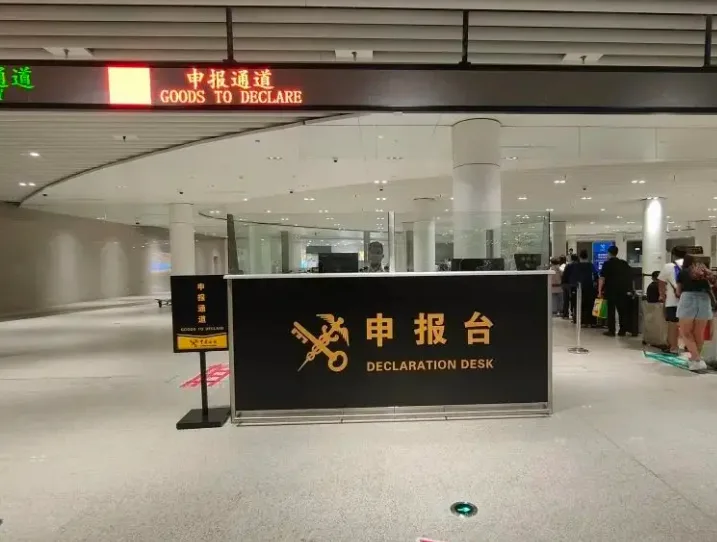
Maritime filing must be completed before booking is confirmed. For storage cabinets, the fixed regulatory order is maritime filing first, then customs declaration, then gate in. Reversing this order results in an immediate rejection. Large containerised storage units must obtain a maritime filing number before a booking can be released, and the declaration must state that the cargo contains lithium batteries, the UN number and the total energy parameter. Declaring such cargo as ordinary equipment is treated as misdeclaration and carries serious consequences including detention, forced return and downgrade of your supplier customs credit rating. We file the maritime declaration five to seven working days ahead of the cut off.
Classification determines whether a packaging certificate is needed at all. This single decision changes your entire document set and your cost. A containerised commercial storage cabinet shipped as one integrated unit with batteries pre installed in a CSC certified freight unit is classified as UN3536, Class 9, with special provision 389 applying. Because the cabinet itself is a certified transport unit rather than a package, it is exempt from the dangerous goods packaging performance certificate, and the substitute evidence is the classification society certificate plus the container certificate. A smaller commercial unit with batteries built into the equipment body falls under UN3481 and does require the packaging certificate. Getting this wrong causes rejection at the terminal.
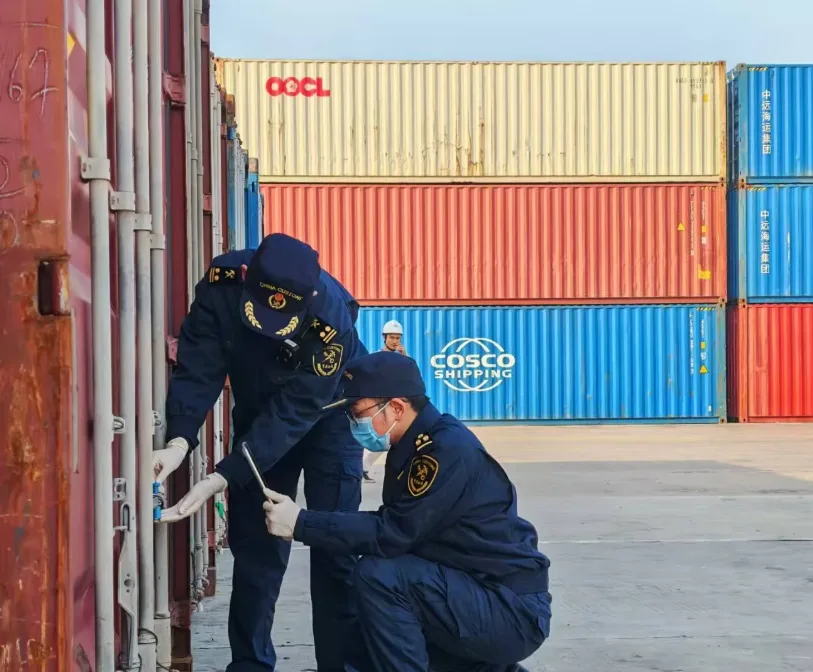
Statutory inspection follows the factory location rule. Transformers under heading 8504, photovoltaic cable and most electrical products carry supervision condition B, meaning mandatory commodity inspection. Such goods must be declared at the customs district where the factory is located, and this cannot be arranged at the port on an ad hoc basis. The sequence is inspection declaration, then generation of the electronic ledger data number, then customs declaration referencing that number. We allow three to five working days for standard goods and seven days where laboratory sampling is involved.
Battery state of charge is spot checked at the port. For all sea freight, the battery state of charge must be at or below thirty percent, and maritime authorities conduct random inspections at the port, with overcharged units detained and forcibly returned. Under the IMDG 42-24 rules now in mandatory enforcement with no transition period, UN3536 cargo is restricted to deck stowage only and must be kept at least 2.4 metres from heat sources. The cabinet must display Class 9 marks on both side faces and both end faces, the UN number on at least two sides where a single battery type is present, the total battery energy in kilowatt hours, and a valid CSC safety approval plate.
Internal securing must be structural rather than cosmetic. Battery modules must be fixed with bolts, rivets or welding through internal brackets, with flame retardant material filling the gaps, and ordinary foam is prohibited. Series and parallel circuits must be disconnected, and the PCS, monitoring and control equipment must be in a de energised state before loading. For heavy cabinets, steel strapping and angle iron external reinforcement is required together with a written securing diagram. We provide the classification society certificate, container certificate, UN38.3 report, transport appraisal report, bilingual MSDS and six sided photographs showing the nameplate, fire suppression system, air conditioning unit and battery fixing method.
High temperature seasons bring extra Zhoushan requirements. Zhoushan maritime issues specific notices for the summer period covering July to September, requiring shippers to accurately report the proper shipping name, physical and chemical properties and hazard class of every dangerous goods consignment, and to provide the safety data sheet with full responsibility for accuracy. Terminal operators must activate spray cooling during high temperature periods, and both vessel and shore parties must verify the ship shore safety checklist item by item before loading begins. Declaration personnel must hold valid certificates, and unlicensed or borrowed certificate practice is prohibited. Our packing supervisors are certified and we retain full photographic records for audit.
Document consistency is now automatically cross checked. The contract, invoice, packing list, UN38.3 report and transport appraisal report must show identical product name, UN number and hazard class, and any mismatch triggers a system level review and a rejected declaration. The shipper name on the transport appraisal report must match the booking party exactly.
Send us your equipment list with cabinet dimensions and gross weight, transformer type and rated capacity, cable drum sizes, and destination country. We will confirm the correct UN classification, whether a packaging certificate applies, the maritime filing timeline, whether direct vehicle to vessel loading is required for your unit weight, and the certificate set your buyer needs at destination. Email us or add WhatsApp +86 15221865538 and we will reply with a written routing and compliance plan for your specific order.